
Application-engineered battery solutions
Golf cart and low-speed vehicle battery projects are driven by system voltage, controller current, terrain, payload, target range, charger and the existing battery tray. A custom lithium pack can combine the required electrical performance with a BMS, enclosure, mounting and optional state-of-charge display.
Application and product references
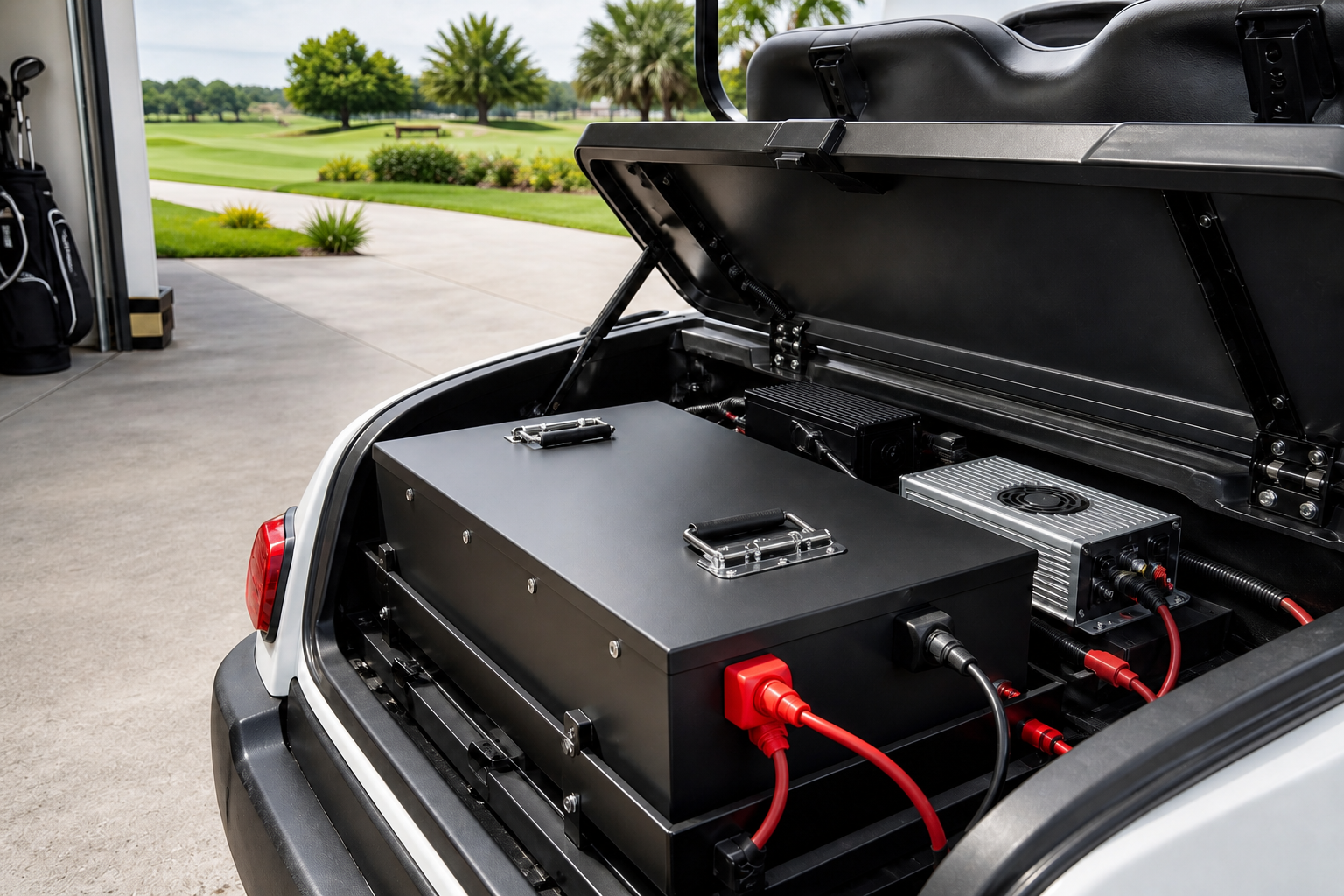
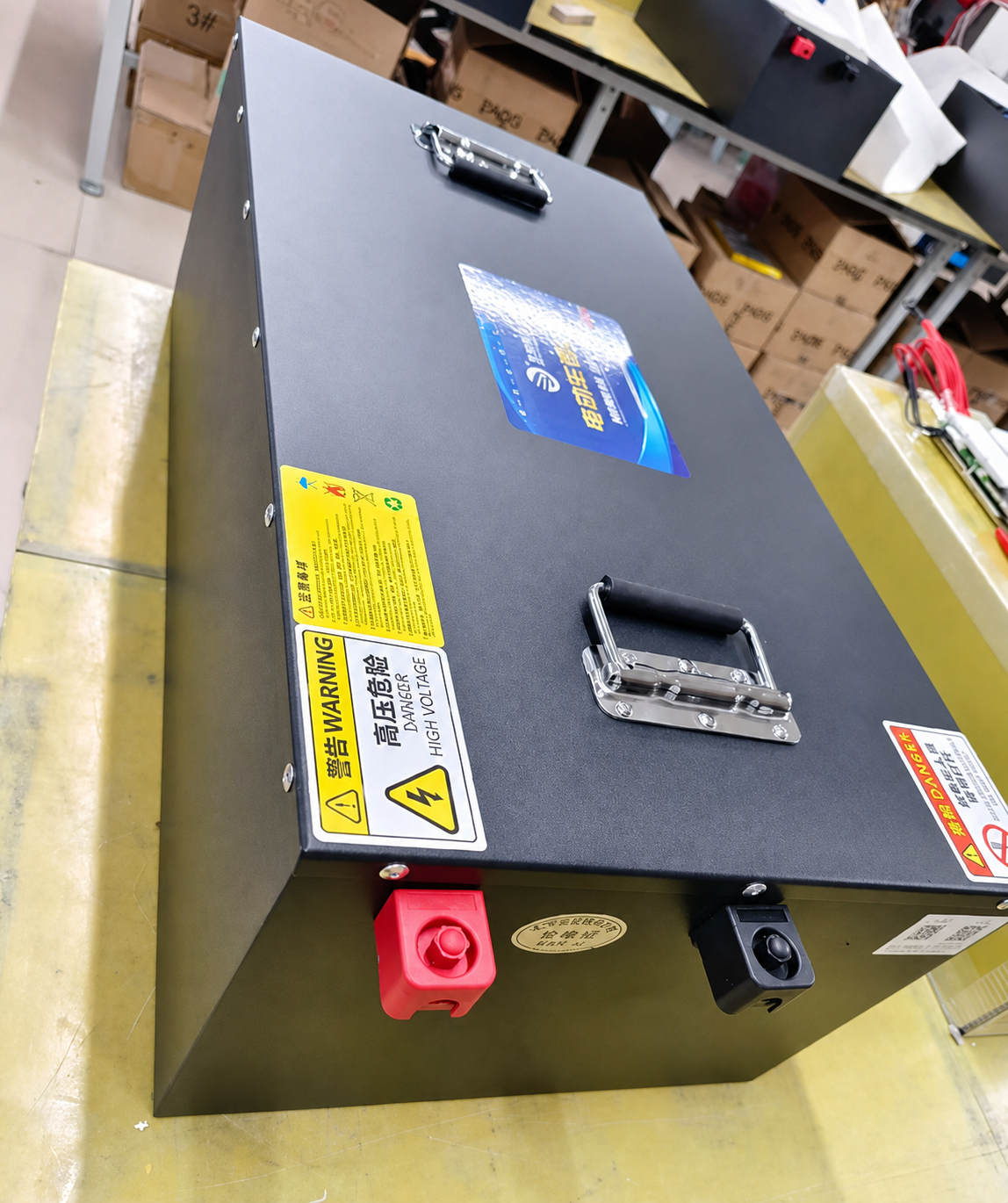
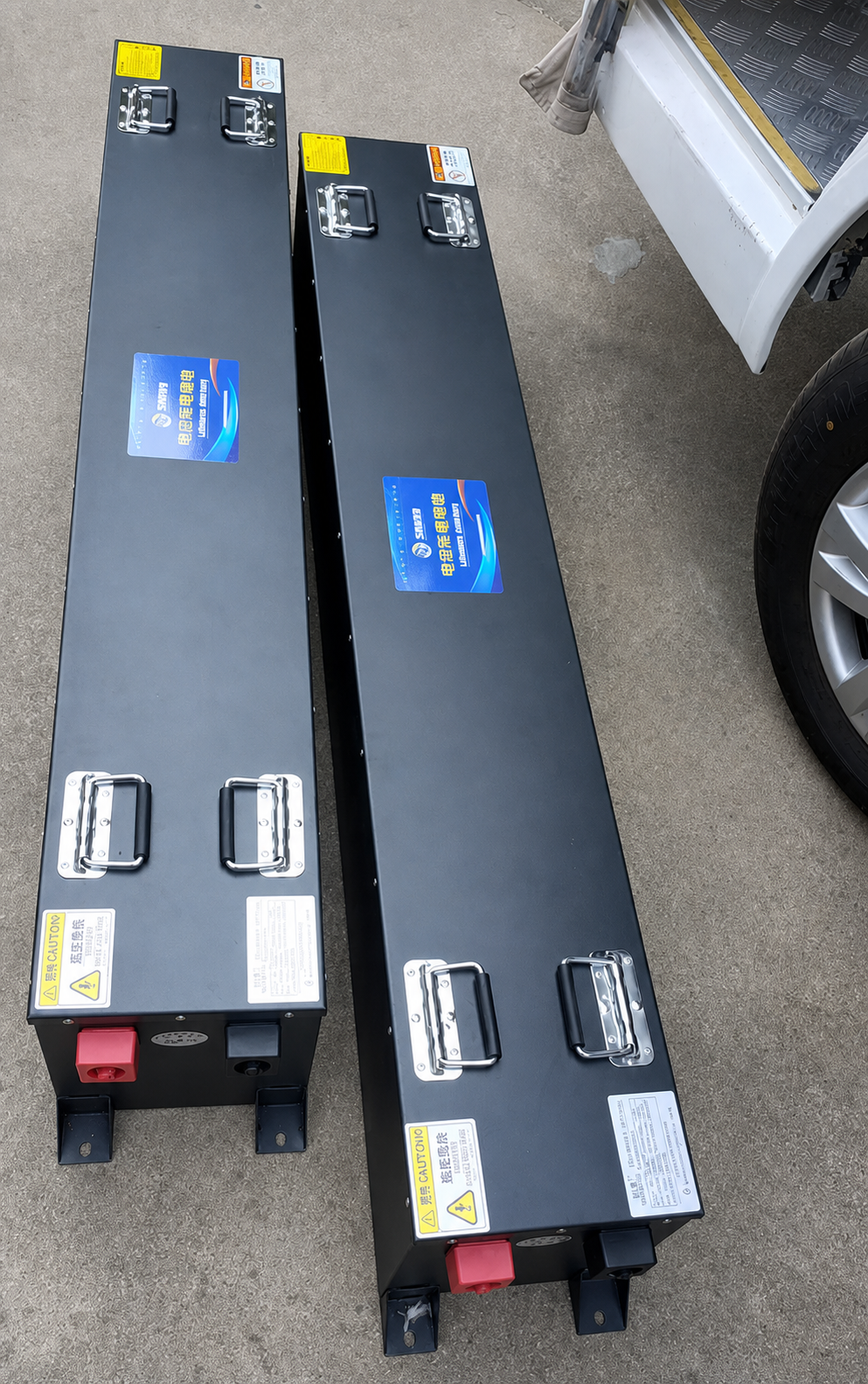
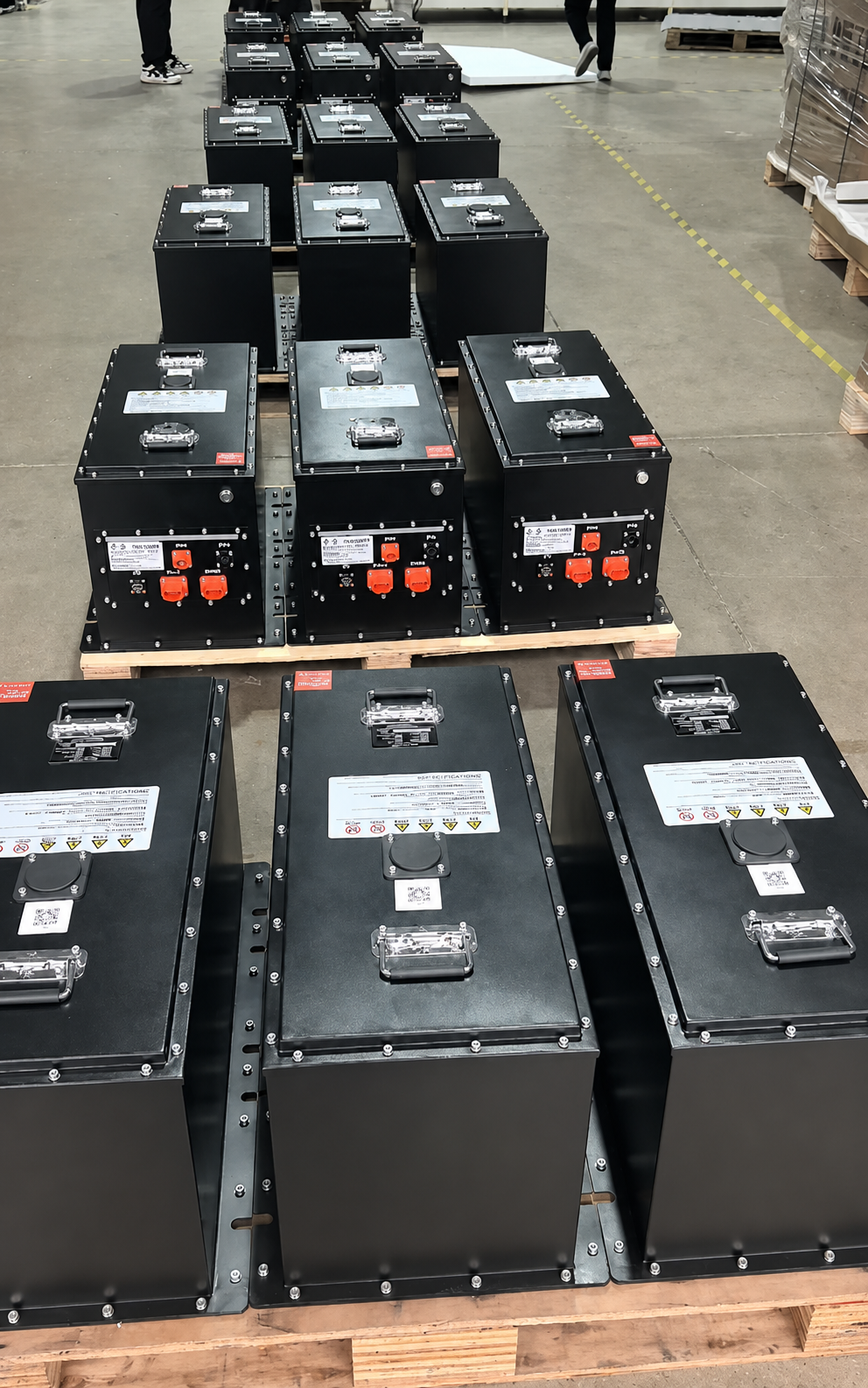
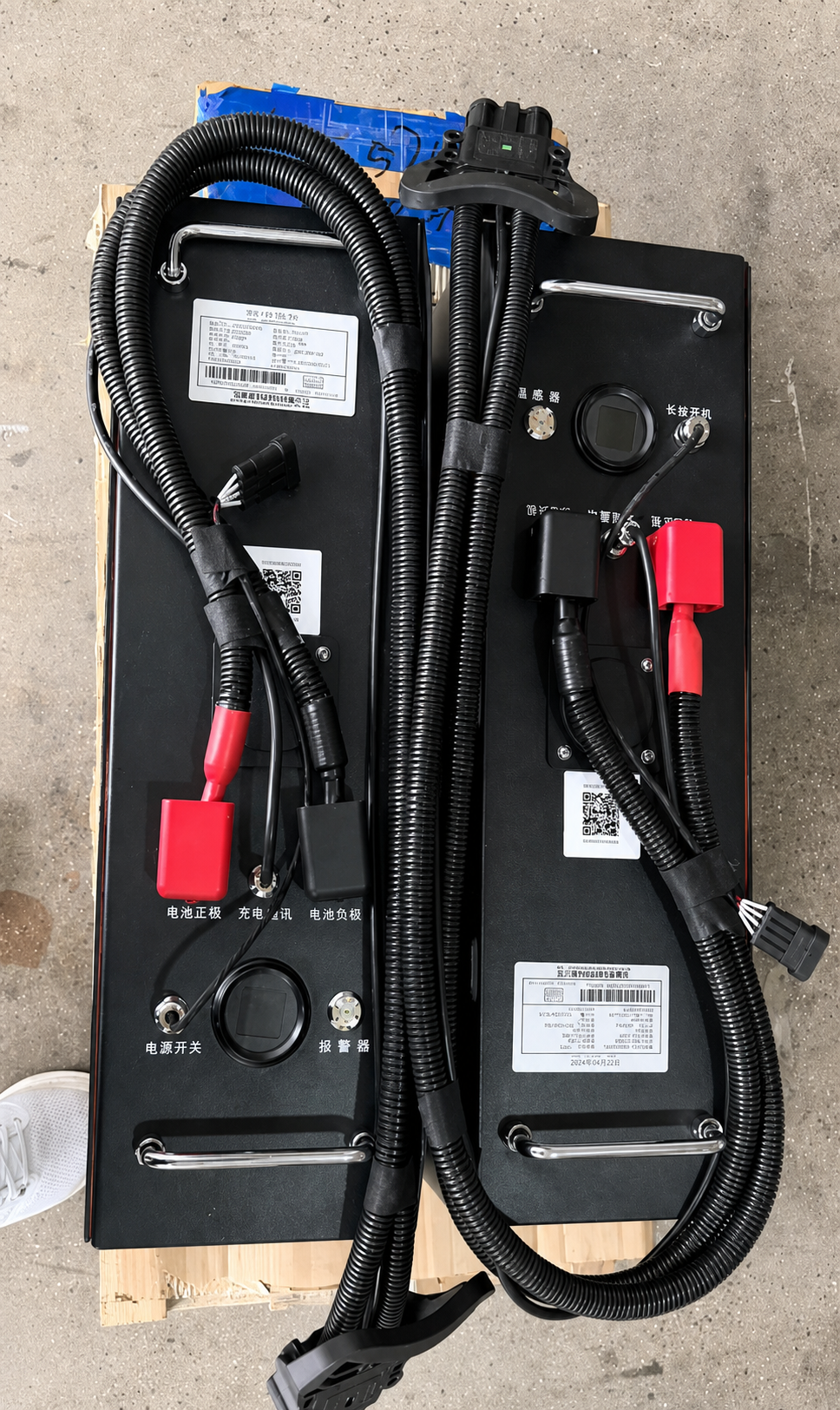
Images show application or product references for discussion and are not customer case studies or performance claims.
Quick answer
To replace a golf cart battery bank, provide the cart model, nominal voltage, motor and controller rating, current lead-acid configuration, tray dimensions, target range, terrain, payload, charger model and expected annual quantity.
What can be customized?
| System voltage | 36V or 48V systems, with equipment compatibility confirmation |
|---|---|
| Range capacity | Sized from route, terrain, payload and reserve target |
| Peak current | Matched to acceleration, incline and controller demands |
| BMS | Current protection, temperature monitoring and SOC functions |
| User interface | Optional display, gauge or communication interface review |
| Mechanical fit | Tray dimensions, hold-downs, weight distribution and connectors |
Typical applications
- Golf carts
- Resort vehicles
- Campus transport
- Utility carts
- Low-speed neighborhood vehicles
- Light maintenance vehicles
Engineering considerations
- Verify controller and charger voltage limits.
- Use route elevation and payload to estimate energy.
- Account for regenerative braking if present.
- Secure the pack against vibration and impact.
- Keep service disconnect and fuse access practical.
From requirement to production
Define
Confirm application, load, runtime, environment, interfaces and target quantity.
Configure
Evaluate chemistry, series-parallel layout, BMS, enclosure, connections and charging.
Prototype
Review drawings and prototype behavior against representative loads and temperatures.
Validate
Agree the tests, documentation and destination-market requirements for the finished design.
Scale
Freeze the approved configuration, quality checks and production information.
Related custom battery solutions
What to send for a quotation
Send the information below so the application can be reviewed as a complete electrical and mechanical system:
- Application and equipment model
- Nominal voltage
- Required capacity, energy or runtime
- Continuous and peak current
- Maximum dimensions and weight
- Operating and storage temperature
- BMS communication or display needs
- Charging source or charger model
- Ingress, vibration and mounting requirements
- Estimated quantity
- Destination market and required standards
Email s18301170098@gmail.com WhatsApp +86 19833770783
Testing, certification, lead time and final performance depend on the approved design and project requirements; confirm them during engineering review.
Frequently asked questions
Can a 48V golf cart use a custom lithium battery?
A 48V design can be evaluated when the controller, motor, charger, peak current and physical tray are known. Nominal and maximum charged voltage must both be compatible.
How is golf cart driving range estimated?
Range depends on usable energy, vehicle efficiency, terrain, speed, payload, tire condition and temperature. A real route profile improves the estimate.
Can the original golf cart charger be reused?
Only if its charging profile is compatible with the lithium pack and BMS. Supplying the charger model and output specification is essential.
Does the battery need a high-current BMS?
The BMS current rating must cover sustained driving and short acceleration or hill-climb peaks with appropriate safety margin.
Send an engineering project brief
These fields help the engineering team review electrical, mechanical, environmental and compliance requirements before quotation.
WhatsApp +86 19833770783 · s18301170098@gmail.com
The form opens your email application; project information is not stored on this website.