Application-engineered battery solutions
Industrial mobile equipment needs a battery designed around duty cycle, shift pattern, motor peaks, charging windows, fleet availability and host-controller communications. Custom forklift, AGV and AMR packs can integrate the electrical system, BMS, CAN or RS485 interface, enclosure and charging connector.
Application and product references
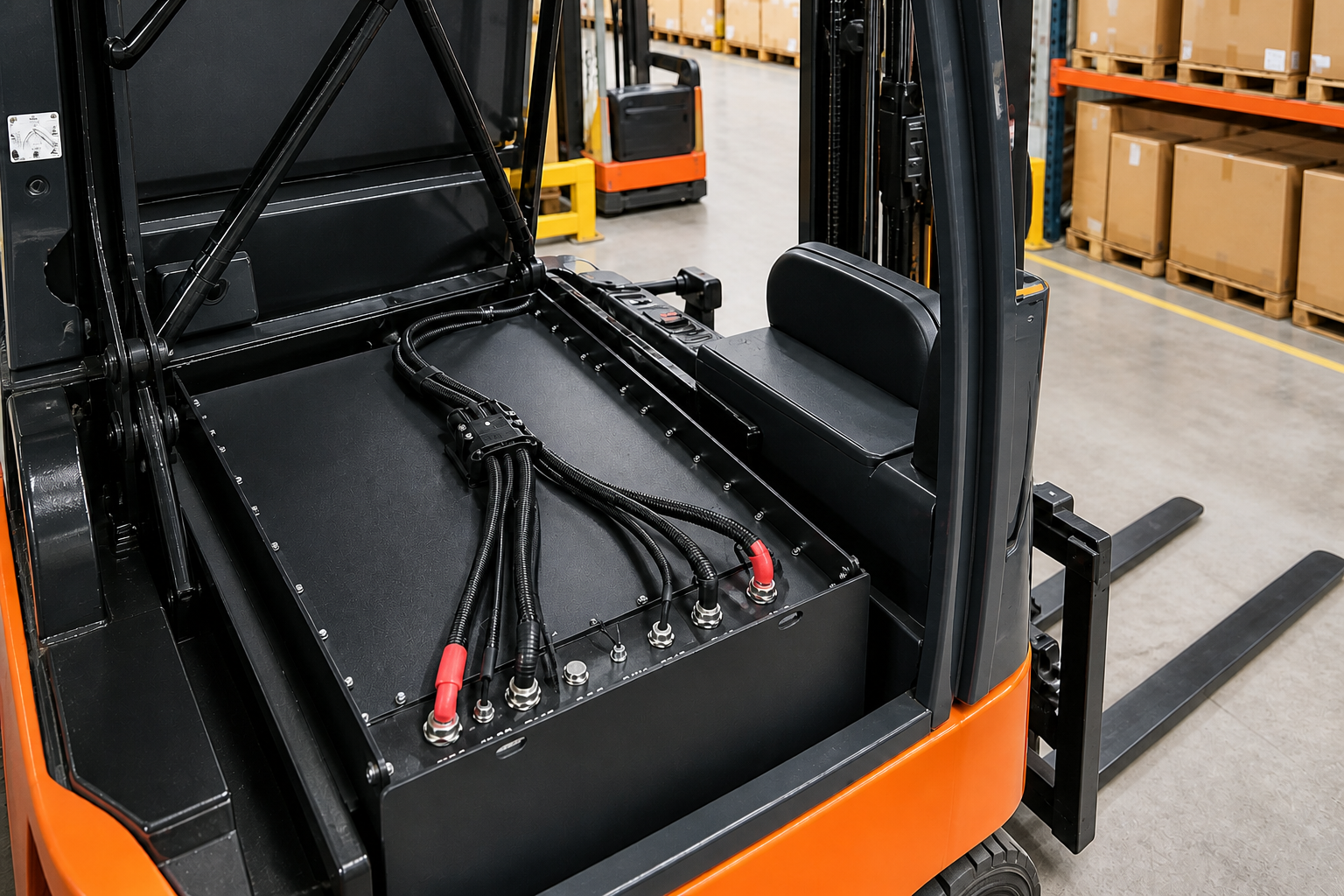
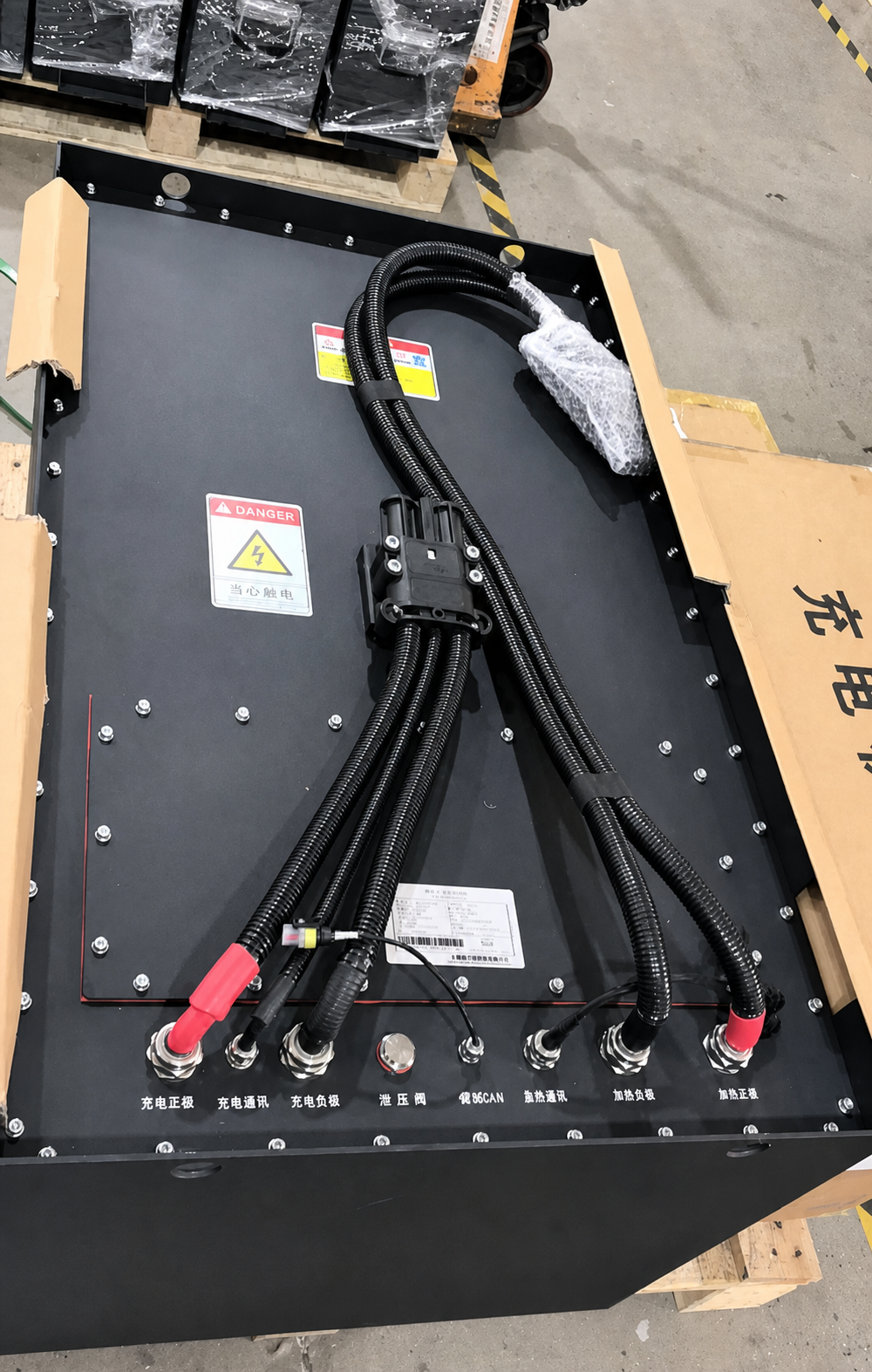
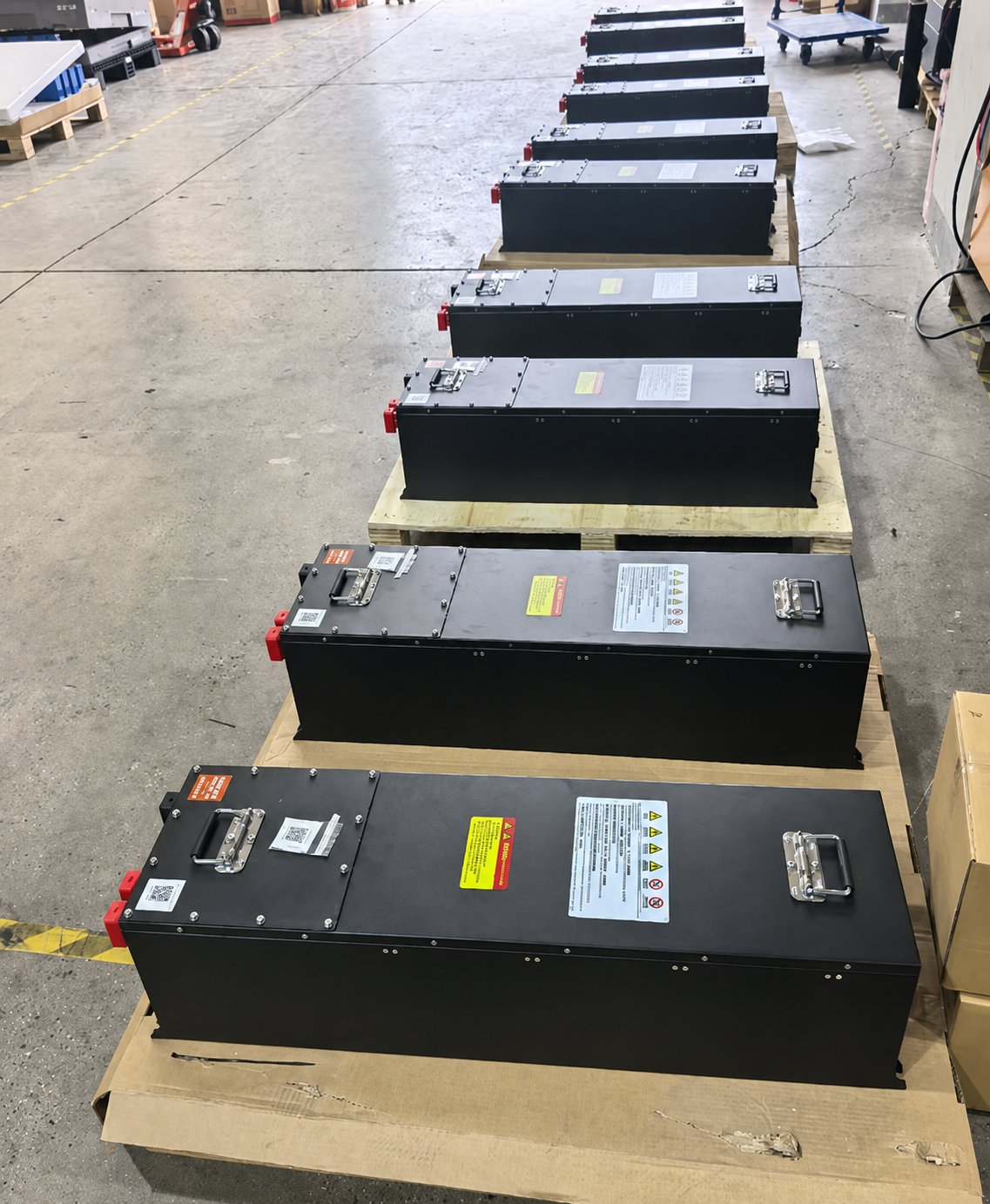
Images show application or product references for discussion and are not customer case studies or performance claims.
Quick answer
For an industrial vehicle battery project, provide equipment model, system voltage, drive and lift loads, current logs if available, hours per shift, charging opportunities, connector, battery bay drawing, communication protocol, environment and fleet quantity.
What can be customized?
| Voltage and energy | Configured around equipment bus and shift energy |
|---|---|
| Current capability | Drive, lift and acceleration peaks evaluated from the duty cycle |
| Communications | CAN, RS485, SOC/SOH and fault reporting requirements review |
| Charging strategy | Overnight, opportunity or automated charging to be defined |
| Mechanical design | Battery bay, mounting, connector access and weight requirements |
| Environment | Warehouse, cold storage, outdoor, dust and vibration conditions |
Typical applications
- Forklifts
- Automated guided vehicles
- Autonomous mobile robots
- Warehouse tuggers
- Material-handling equipment
- Industrial service robots
Engineering considerations
- Use measured current and duty-cycle data where possible.
- Coordinate BMS messages with the vehicle controller.
- Plan charging around required fleet uptime.
- Confirm whether battery weight contributes to counterbalance.
- Validate connectors, isolation and emergency disconnect procedures.
From requirement to production
Define
Confirm application, load, runtime, environment, interfaces and target quantity.
Configure
Evaluate chemistry, series-parallel layout, BMS, enclosure, connections and charging.
Prototype
Review drawings and prototype behavior against representative loads and temperatures.
Validate
Agree the tests, documentation and destination-market requirements for the finished design.
Scale
Freeze the approved configuration, quality checks and production information.
Related custom battery solutions
What to send for a quotation
Send the information below so the application can be reviewed as a complete electrical and mechanical system:
- Application and equipment model
- Nominal voltage
- Required capacity, energy or runtime
- Continuous and peak current
- Maximum dimensions and weight
- Operating and storage temperature
- BMS communication or display needs
- Charging source or charger model
- Ingress, vibration and mounting requirements
- Estimated quantity
- Destination market and required standards
Email s18301170098@gmail.com WhatsApp +86 19833770783
Testing, certification, lead time and final performance depend on the approved design and project requirements; confirm them during engineering review.
Frequently asked questions
What data is needed to size an AGV battery?
Useful data includes bus voltage, average and peak current, route duration, idle time, charging windows, payload, temperature, battery-bay dimensions and communications.
Can an AGV battery communicate over CAN or RS485?
A communication interface can be evaluated when the protocol, required messages, update rate and host-controller expectations are provided.
What is opportunity charging?
It means charging during short operational pauses. The battery, charger, connectors, thermal limits and fleet schedule must support the intended charge rate.
Can lithium replace a forklift lead-acid battery?
The review must include voltage, peak current, charger, connector, battery weight, counterbalance role, bay size and applicable equipment requirements.
Send an engineering project brief
These fields help the engineering team review electrical, mechanical, environmental and compliance requirements before quotation.
WhatsApp +86 19833770783 · s18301170098@gmail.com
The form opens your email application; project information is not stored on this website.