
What is a solar water pump system?
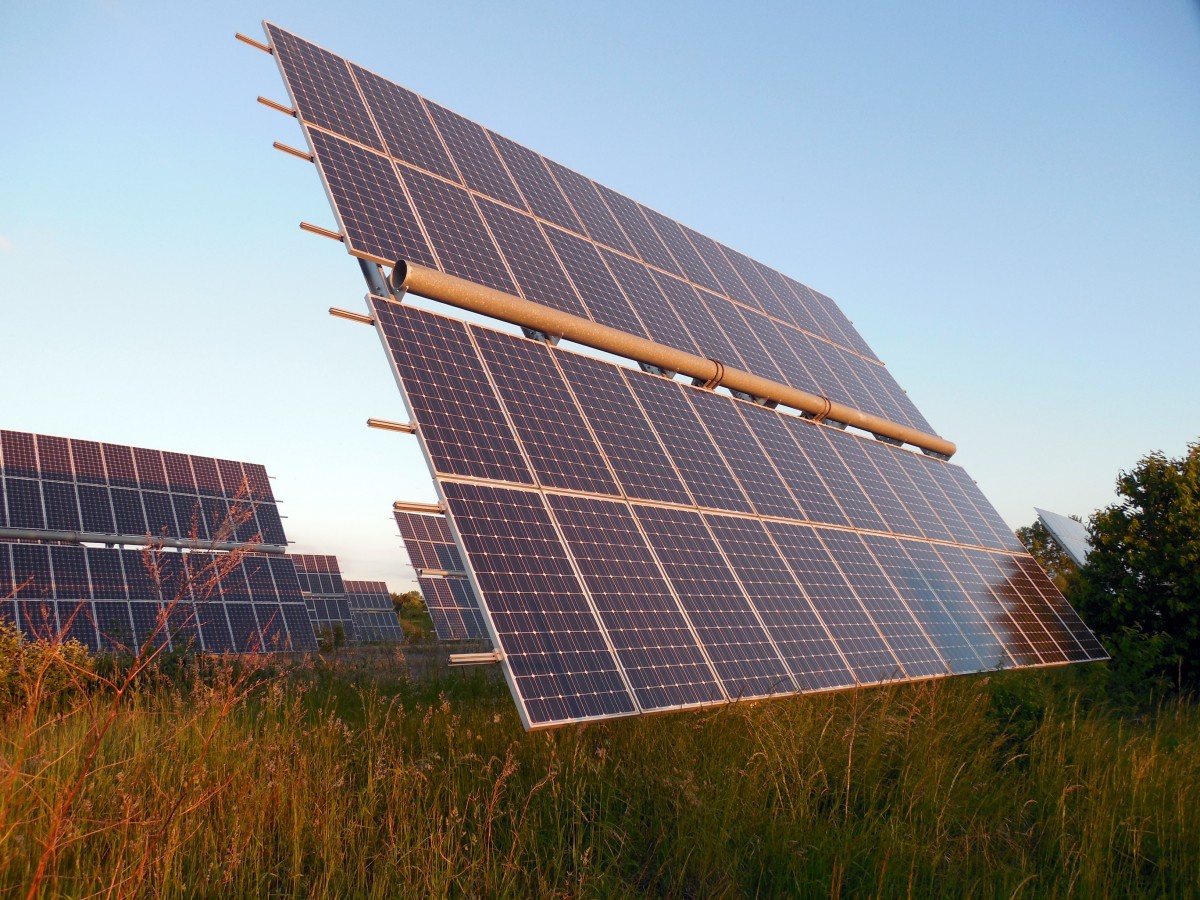
A solar water pump system uses a photovoltaic array to drive a pump directly, without a battery in the daytime-pumping configuration, or through a battery where water is needed outside daylight hours. It is used for irrigation, livestock watering, village water supply and swimming pool circulation where the grid is absent, unreliable or expensive to extend.
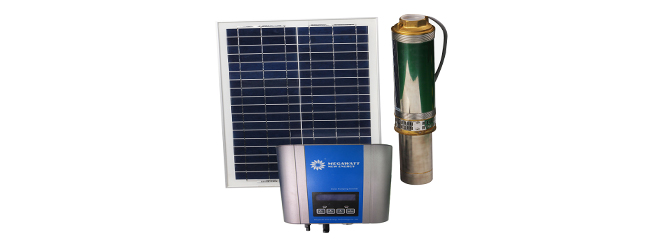
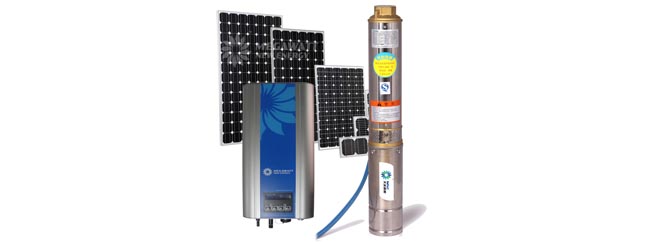
The system has four parts: the PV array, the pump controller or variable frequency drive, the pump itself, and the water source with its delivery pipework. Sizing any one of them without the other three produces a system that either under-delivers in the dry season or wastes money on oversizing.
AC or DC solar pump: which one fits your site?
| Dimension | DC pump system | AC pump system |
|---|---|---|
| Typical use | Small to medium boreholes, off-grid | Larger flows, existing AC infrastructure |
| Controller | Dedicated MPPT solar controller | VFD with solar input or AC from inverter |
| Efficiency at low irradiance | Good, MPPT tracks the array directly | Depends on the inverter and drive losses |
| Maintenance | Fewer components; brushless DC motors | Standard AC motor service network |
| Grid backup | Needs a separate charger or changeover | Natural changeover to grid or generator |
| Best fit | Remote sites, low maintenance access | Sites with grid backup and larger duty |
The decision usually follows from whether the site has a reliable grid connection: if it does, an AC pump with solar assist is simpler to support; if it does not, a DC pump with MPPT control removes an inverter from the reliability chain.
How to size a solar water pump
- Daily water requirement — litres or cubic metres per day at the peak demand period, not the annual average.
- Total head — static lift from the water level to the discharge point, plus friction losses in the pipe, plus discharge pressure if the outlet is pressurised.
- Drawdown — the pumping water level during operation, which is lower than the static level and is what the pump actually works against.
- Peak sun hours — the daily insolation figure for the site; this converts the hydraulic energy requirement into array size.
- Array sizing — hydraulic energy divided by pump efficiency and system losses, then divided by peak sun hours, with a margin for soiling and ageing.
- Pump selection — choose the pump whose curve gives the required flow at the required head at the best efficiency point, not one that is merely larger.
A common sizing mistake is quoting the pump on static head. The pump runs on drawdown head, and in a deep borehole the difference can be tens of metres.
Surface pump or submersible pump?
- Submersible — installed below the water level in a borehole, well or tank. Required where suction lift exceeds about seven metres, which is most boreholes.
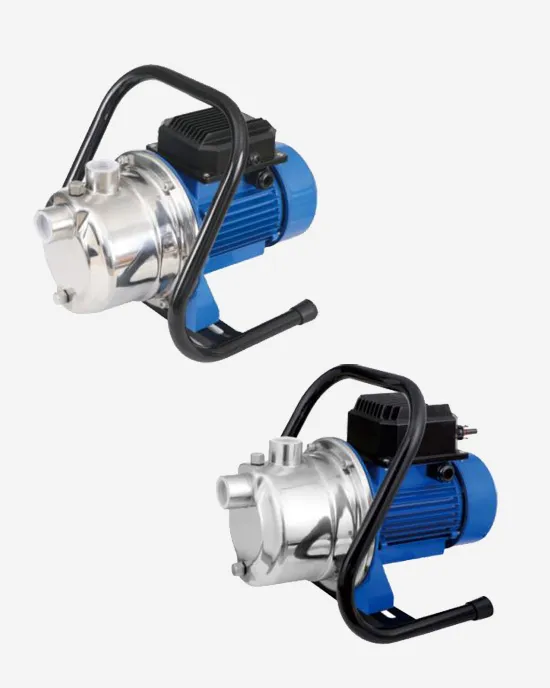
- Surface — mounted at ground level, drawing from a shallow source through a suction pipe. Simpler to service, but limited by suction lift and by priming.
The choice is set by the water source geometry, not by preference: if the water table is more than a few metres down, the pump has to be in the water.
What causes solar pump failure in the field?
- Dry running — the well or tank empties and the pump runs without water; a level sensor or dry-run protection is mandatory, not optional.
- Array and pump mismatch — a pump selected for a nominal voltage that the array cannot hold under load, so it stalls at low irradiance.
- Lightning and surge — the array is an exposed conductor; surge protection on the DC side is part of the installation.
- Sand and sediment — abrasion of impellers in boreholes that were not developed properly before commissioning.
- Undersized cable — voltage drop on long submersible cable runs reduces the available starting torque.
Installation and commissioning checklist
- Develop the borehole and confirm sand content before installing the pump.
- Record static and pumping water levels and confirm the pump setting depth against the drawdown.
- Check array orientation, tilt and shading at the worst month, not the best.
- Verify cable sizing against the run length and the pump starting current.
- Fit dry-run protection and confirm it trips.
- Commission at midday and log flow, head and array power; compare with the design point.
- Record the baseline for future performance checks, since gradual flow loss is the first sign of wear.
Frequently asked questions
Can a solar pump run at night?
Only with a battery or with grid or generator backup. A direct-coupled solar pump stops when irradiance falls below its starting threshold.
How many panels does a solar pump need?
It follows from the hydraulic energy requirement and the site’s peak sun hours. There is no useful rule of thumb in panels per horsepower, because head varies so widely between sites.
What happens in cloudy weather?
Output falls with irradiance. A system sized for peak demand on a clear day will deliver reduced flow on overcast days, so storage or a backup source should be part of the design if supply continuity matters.
How do I know the pump is oversized?
The signs are a flow that exceeds the design duty at low head, a pump running far from its best efficiency point, and a motor that draws more current than the array can sustain at the ends of the day. An oversized pump also empties a low-yield borehole faster, which increases the number of dry-run stops.
Can one controller run two pumps?
Only where the controller is designed for it. Running a second pump in parallel shifts the operating point, so the combined curve has to be checked against the array capacity rather than assumed from a single-pump rating.